- THE SOCIETY Newsletter
- Posts
- The SOCIETY #115

When Did the Masters Become a Major Championship?
—Writers, Hard Times, and the Making of Golf’s Fourth Pillar

It feels inevitable now that the Masters sits alongside the U.S. Open, The Open Championship, and the PGA Championship. But the Masters was not born a major…it became one. And that ascent was neither accidental nor purely competitive.
It was written into existence.
It was sustained through hardship.
And it was ultimately validated by moments so powerful they could not be ignored.
⸻
The Early Years: An Invitational with an Idea
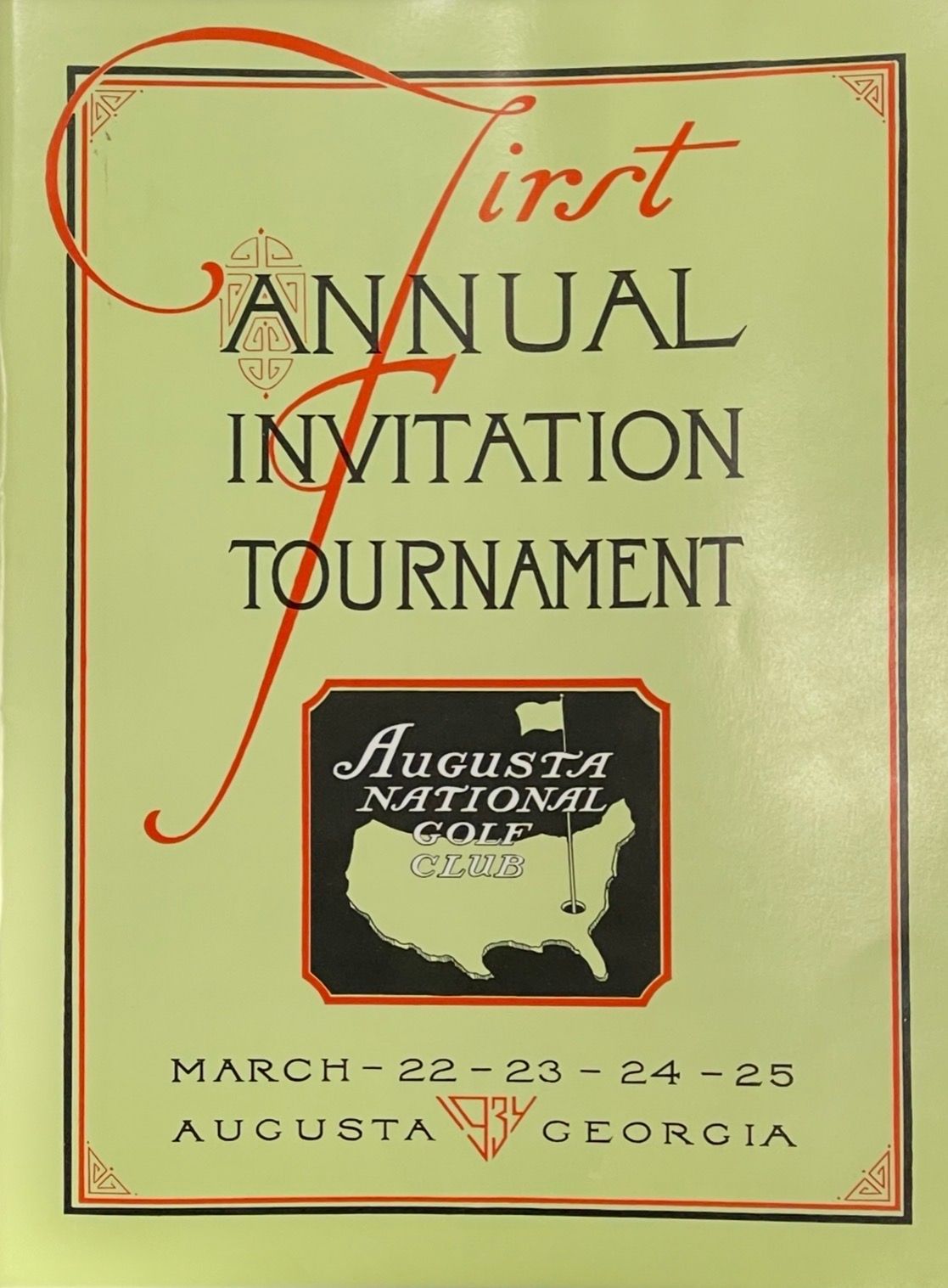
When the tournament debuted in 1934 as the Augusta National Invitation Tournament, it entered a fractured championship landscape. There was no agreed-upon “professional Grand Slam.” The U.S. Open, Open Championship, and PGA Championship were secure—but the fourth slot was unsettled.
The Masters was different from the outset:
• A permanent home at Augusta National
• A curated invitational field
• A tournament born from vision rather than tradition
But vision alone does not create stature.
It needed amplification—and a moment.
⸻
The Writers: Architects of Legitimacy
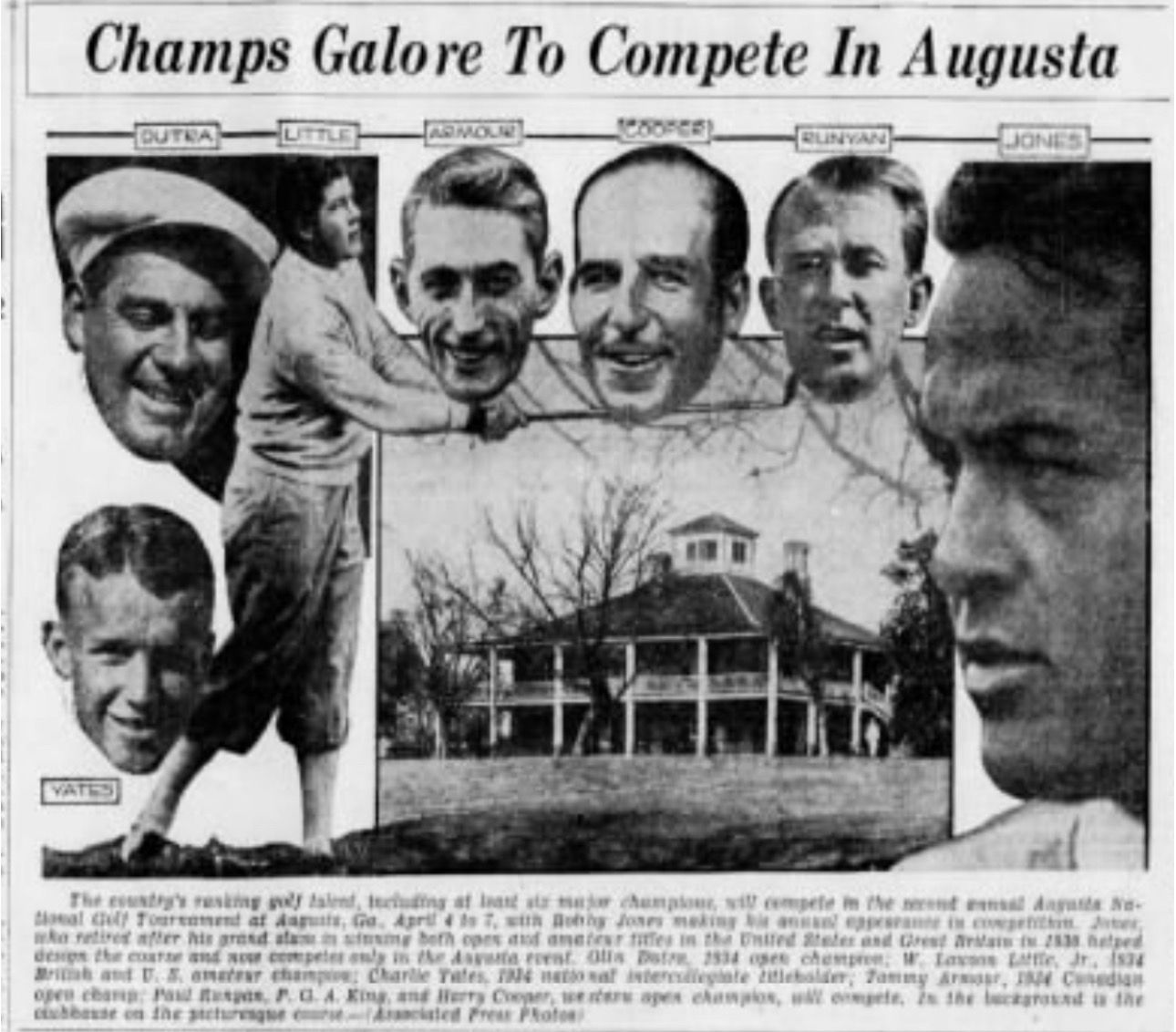
Before television, the writers were the game’s kingmakers.
And no figure loomed larger in the early success of the Masters than Grantland Rice, a founding member of Augusta National and one of the most influential voices in American sport.
Rice didn’t just report on the Masters, he advocated for it. Through his nationally syndicated columns, he framed Augusta National as something grander than a new tournament. He gave it mythology before it had history.
Writers like Rice:
• Elevated the Masters in tone and importance
• Introduced it to a national audience
• Positioned it alongside the game’s great championships early on
They didn’t wait for the Masters to become a major.
They helped will it into one.
⸻
The Great Depression: Survival as Validation

The Masters was born in the depths of the Great Depression, a brutal time for golf and for sport as a whole.
Clubs were closing. Travel was difficult. Professional golf was unstable.
Augusta National could have easily failed.
Instead, it endured and more importantly, it committed to strong fields and continuity. By supporting professionals and ensuring annual play, the Masters built credibility year by year when many others could not. What is interesting is that one of the annual traditions of the Masters is the inclusion of amateur golfers- well in the beginning it was a bit of a necessity. Jones reluctantly came out of retirement to help grow interest in the new tournament.
Survival during the Depression wasn’t just resilience.
It was also a proof of concept.
⸻
1935: The Shot That Changed Everything

Dom Lupo’s painting of Sarazen’s 1935 Albatross
If the writers built the stage, then Gene Sarazen delivered the moment that lit it up.
In a telling detail, Sarazen skipped the inaugural 1934 tournament, choosing instead to play exhibition matches for guaranteed money—a reflection of both the economic realities of the time and the uncertain status of the new event.
But in 1935, he returned.
And in the final round, on the par-5 15th hole, Sarazen struck what would become known as the “Shot Heard ’Round the World”—a double eagle (albatross) that vaulted him into a tie for the lead and ultimately to victory in a playoff.
That single swing did more than win a tournament.
It gave the Masters:
• A defining moment
• National headlines
• A place in sporting lore
In an era driven by newspapers and radio, Sarazen’s shot became a sensation. It transformed the Masters from an interesting new invitational into a tournament people had to pay attention to.
If Grantland Rice gave the Masters its voice, Sarazen gave it its first legend.
⸻
Herbert Warren Wind: Naming the Reality
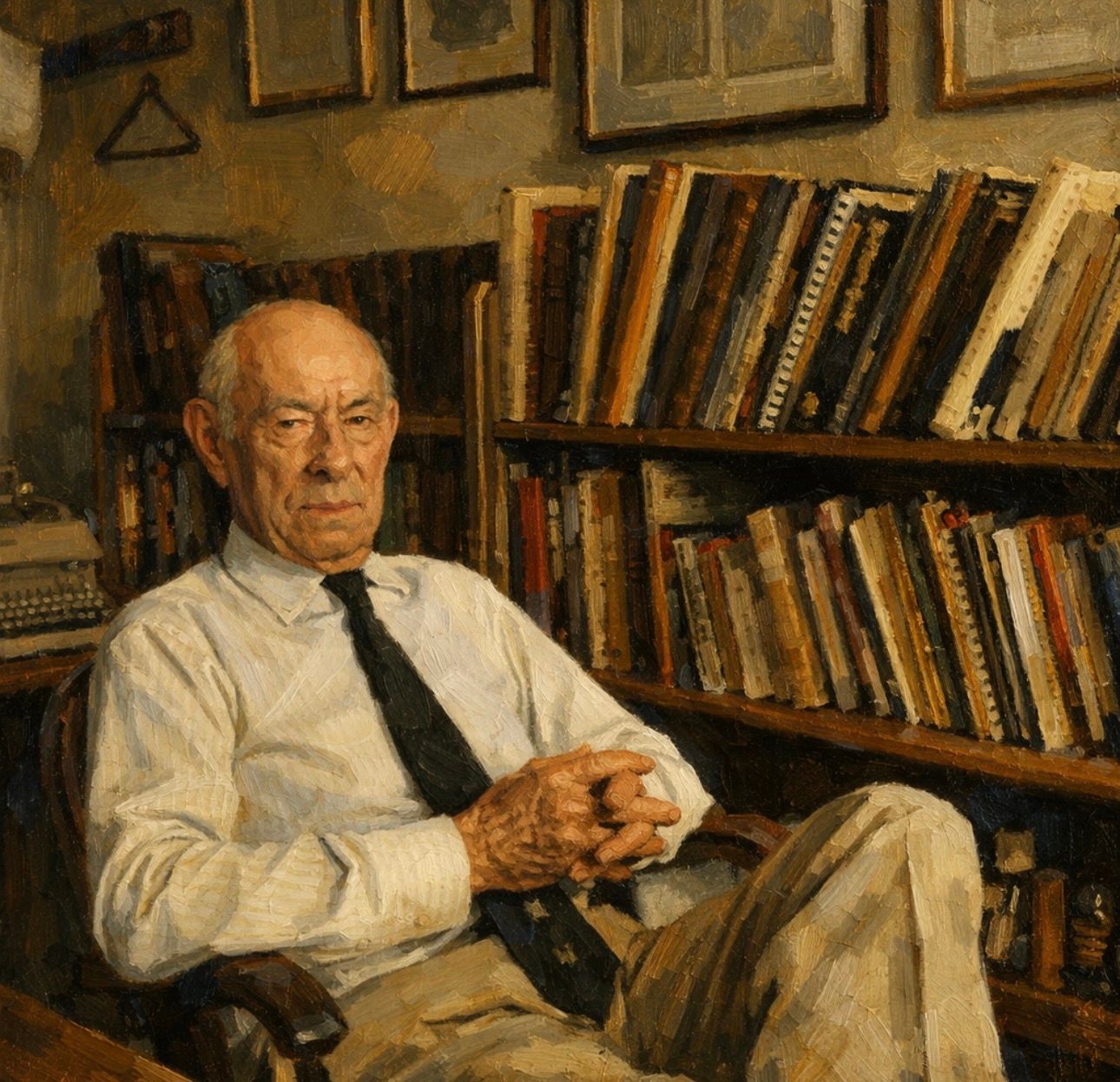
By the 1940s and 1950s, writers like Herbert Warren Wind were no longer introducing the Masters, they were defining its place.
Wind consistently referred to four major championships:
• The Masters
• The U.S. Open
• The Open Championship
• The PGA Championship
By 1958, he formalized this structure in print.
But the truth is, he wasn’t creating it.
He was acknowledging what already existed.
⸻
1953: The Grand Slam Was Already Understood
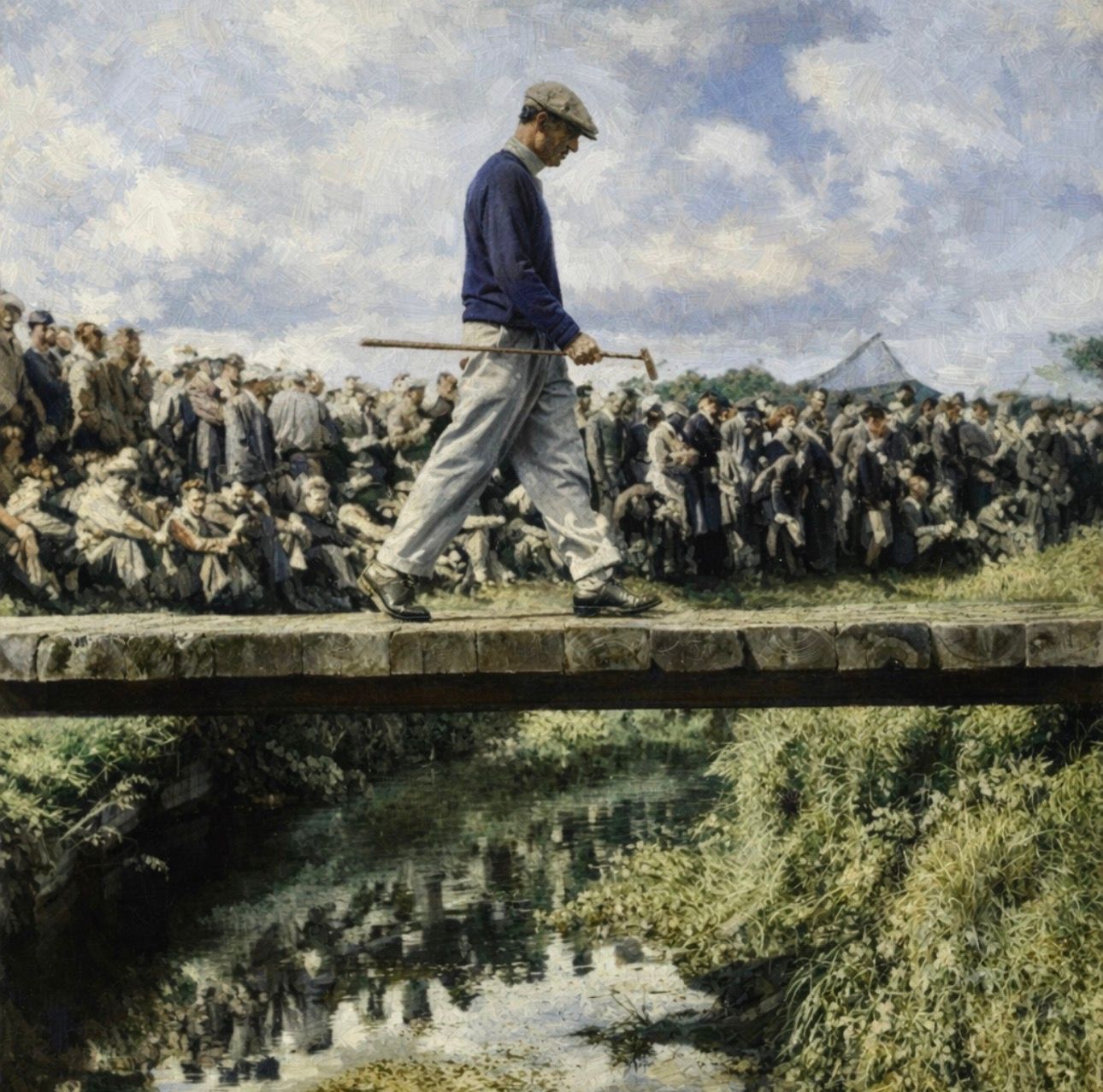
Hogan at Carnoustie in 1953
By 1953, the idea of the modern Grand Slam was already fully formed.
That year, Ben Hogan won:
• The Masters
• The U.S. Open
• The Open Championship
Three of the four majors.
Writers of the time openly discussed Hogan’s pursuit of the Grand Slam—and lamented that he never had a chance to complete it.
Why?
Because the Open Championship overlapped with PGA Championship qualifying.
Hogan had to choose. He chose to play—and win—The Open.
This is the key insight:
The Grand Slam already existed in the minds of writers and players.
The Masters was already one of golf’s pillars.
Hogan’s “Triple Crown” is not just a great achievement—it is a milestone in the structure of the game itself. It marks the moment when the modern championship framework was fully understood, even if scheduling prevented its perfection.
⸻
Palmer and the Popular Myth
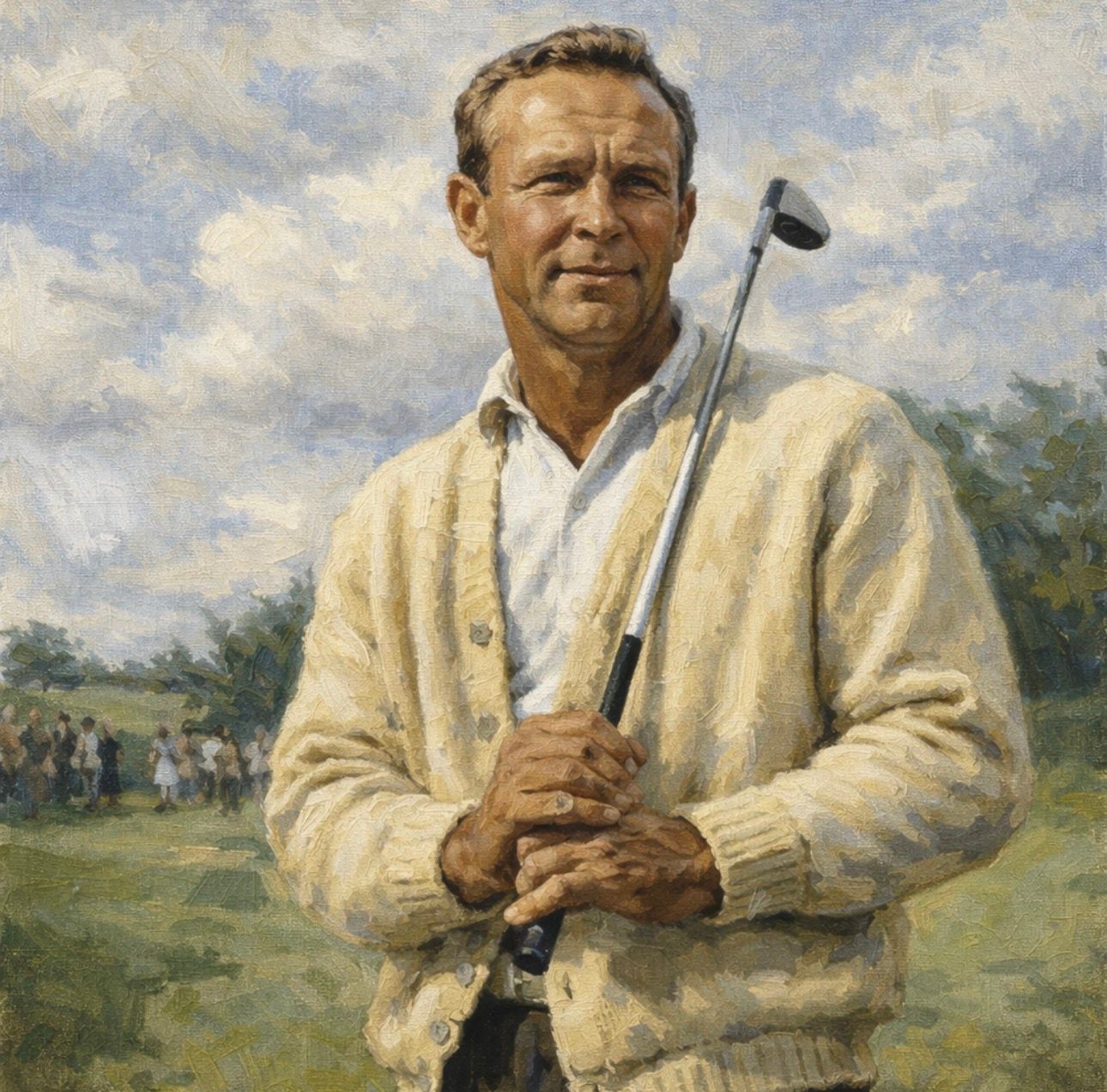
When Arnold Palmer began his Grand Slam pursuit in 1960, he didn’t invent the concept, he popularized it.
With journalist Bob Drum, Palmer turned the four majors into a narrative quest.
But by then, the Masters had long since earned its place but a myth was born - a myth that Palmer created the four majors- a myth that still lives on.
⸻
Why the Masters Succeeded
The Masters became a major because it aligned:
Vision — Bobby Jones and Clifford Roberts built something intentional and enduring.
Voice — Writers like Grantland Rice and Herbert Warren Wind shaped its perception.
Moments — Sarazen’s 1935 shot gave it instant mythology.
Validation — Hogan’s 1953 season confirmed its competitive weight.
And beneath it all:
Continuity during the Great Depression gave it legitimacy when few new tournaments could survive.
⸻
Conclusion: A Major Forged in Story and Substance
The Masters became a major sometime between 1934 and the late 1940s.
But by 1953, there was no debate left.
• It had its defining moment (Sarazen, 1935)
• It had its champions (Hogan, 1953)
• It had its chroniclers (Rice and Wind)
• And it had its place in the Grand Slam
The Masters did not arrive as a major.
It was written into existence,
elevated by history,
and sealed by a single swing that echoed around the world.
The Masters was not born a major—it became one. Through extraordinary competition, a singular stage at Augusta National, the design genius of Dr Alister MacKenzie and the guiding hand of the game’s first Grand Slam champion, Bobby Jones, it earned its place among golf’s greatest championships. There was no defining moment when it joined the ranks of the Open, U.S. Open, and PGA Championship—only a point in time when its stature became undeniable.
THE SOCIETY GOLF AUCTION

The MacKenzie Course at the 21 Golf Club
The Third Annual Society of Golf Historians Auction is set to take place in April. The auction will be online via www.EBTH.com.
We have major championship venues and courses designed by the likes of: Dr. Alister MacKenzie, Seth Raynor, Donald Ross, Walter Travis, Willie Park, Junior and more.
TALKINGOLF HISTORY #150
An Interview with Padraig Harrington Part 2

————————
THANK YOU
Thank you for taking the time to read our weekly newsletter. If you haven’t had the chance check out our recent podcasts with our special guest Padraig Harrington.