- THE SOCIETY Newsletter
- Posts
- The SOCIETY Newsletter #100

A Short History of Mini-Putt: How the World Fell in Love with Small Golf
Miniature Golf—often dismissed as a roadside amusement—has a far deeper and more surprising history than most golfers realize. Its roots stretch back more than a century, rising from the intersection of golf culture, social norms, ingenuity, and eventually American entrepreneurship. What began as a Victorian workaround for women golfers became a global pastime and a cultural icon.
The First Miniature Courses: Golf Scaled for Victorian Society (1860s–1890s)
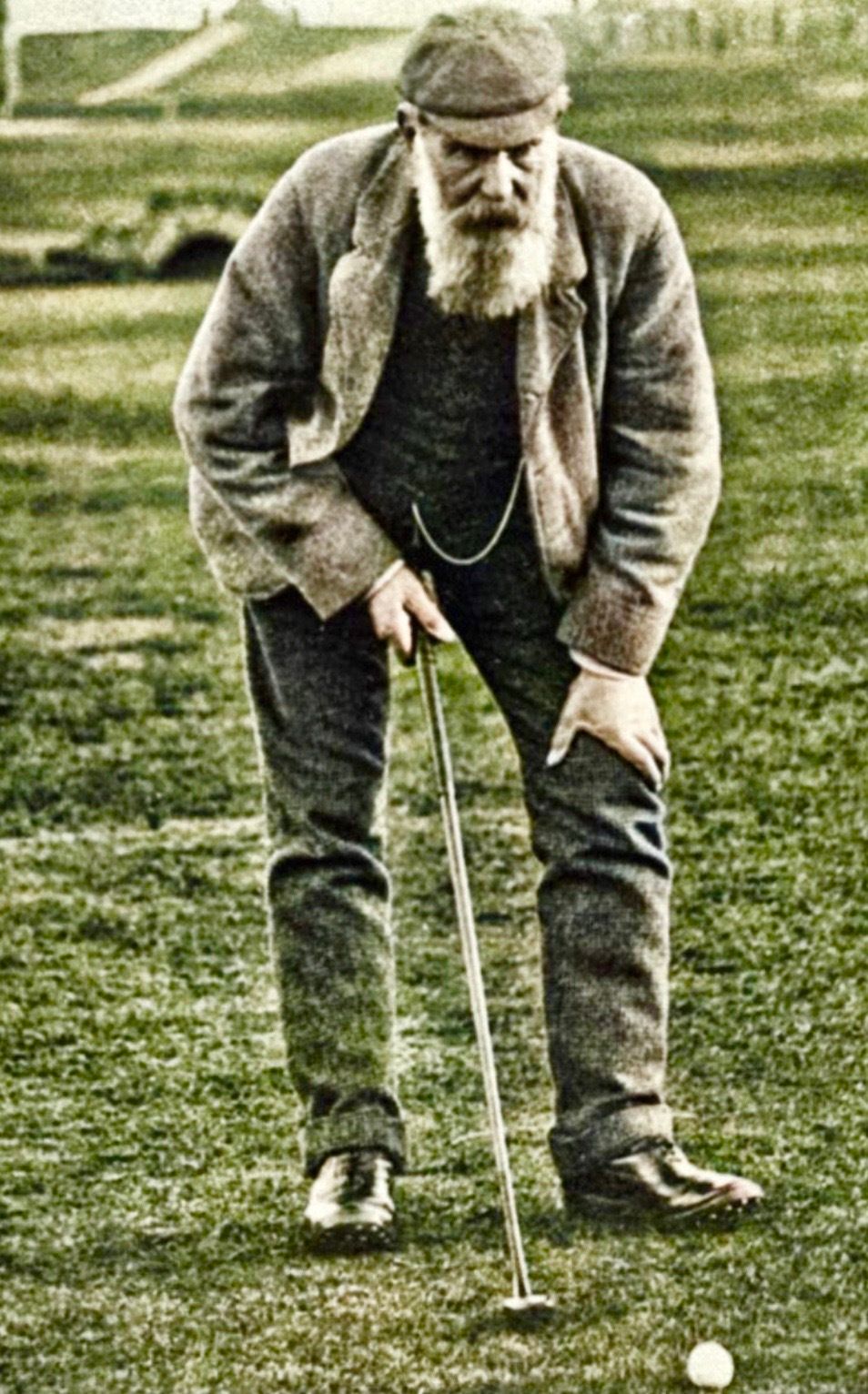
Old Tom Morris
The earliest ancestor of mini-putt was born not from whimsy but from Victorian propriety. In the late 19th century, women of the golfing class were often discouraged from full swings—considered unladylike or too physically demanding. To give women a place to play, clubs across the UK built “putting courses”: small, manicured greens designed for putting only.
The most famous example was the Ladies’ Putting Club of St Andrews, founded in 1867. Its jewel—the Himalayas Putting Course designed by Old Tom Morris—still exists today and remains one of the finest (and most chaotic) putting experiences on earth. Undulating, natural, strategic, and fun, it demonstrated that “small golf” could be real golf.
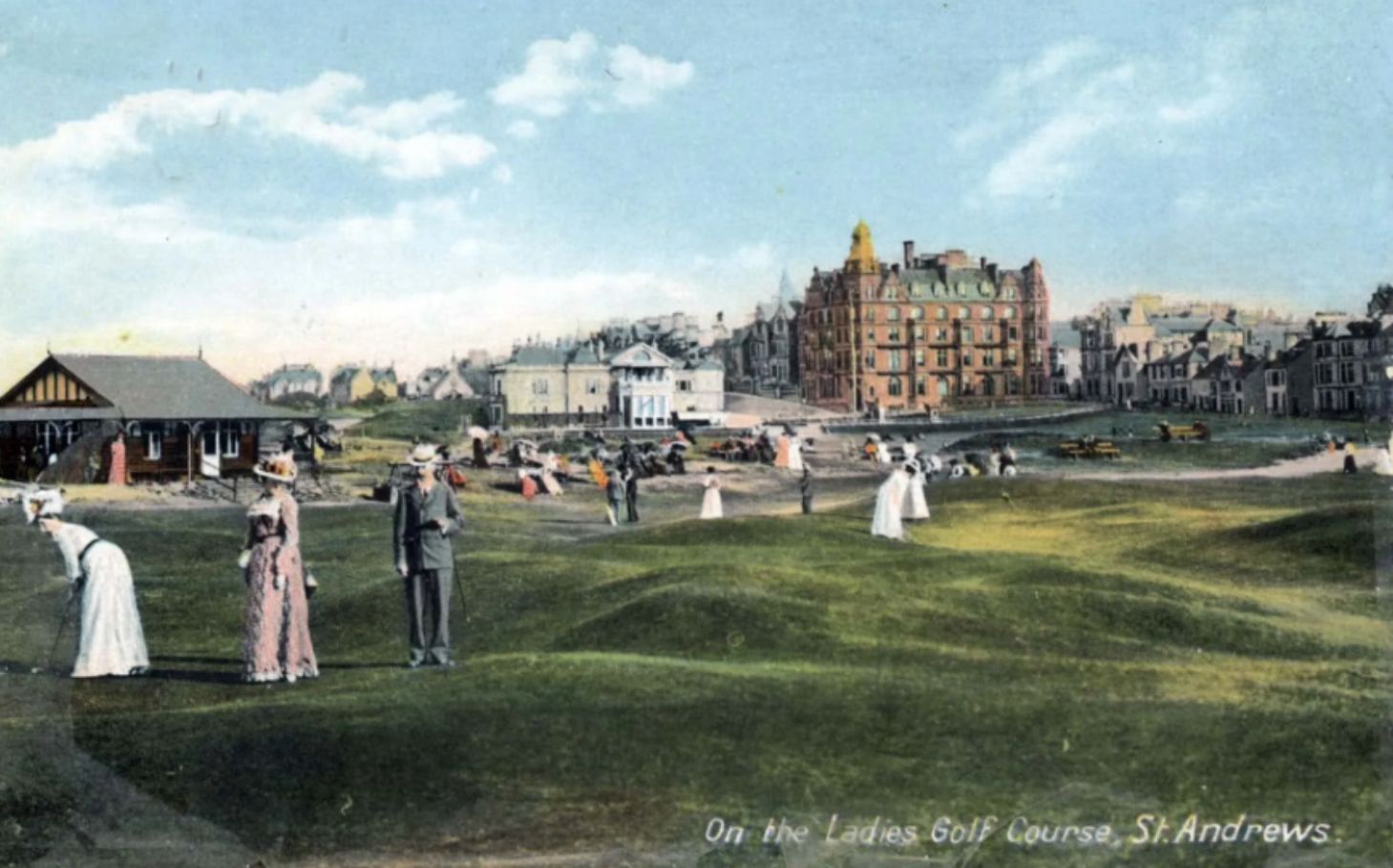
These early putting greens were not mini-putt as we know it—but they planted the idea that golf could thrive even when downsized.
The Birth of Commercial Miniature Golf (1910s–1920s)
Miniature golf as a designed attraction emerged in America in the early 20th century. Two key pioneers deserve credit:
1. James Barber – “Thistle Dhu” (1916)
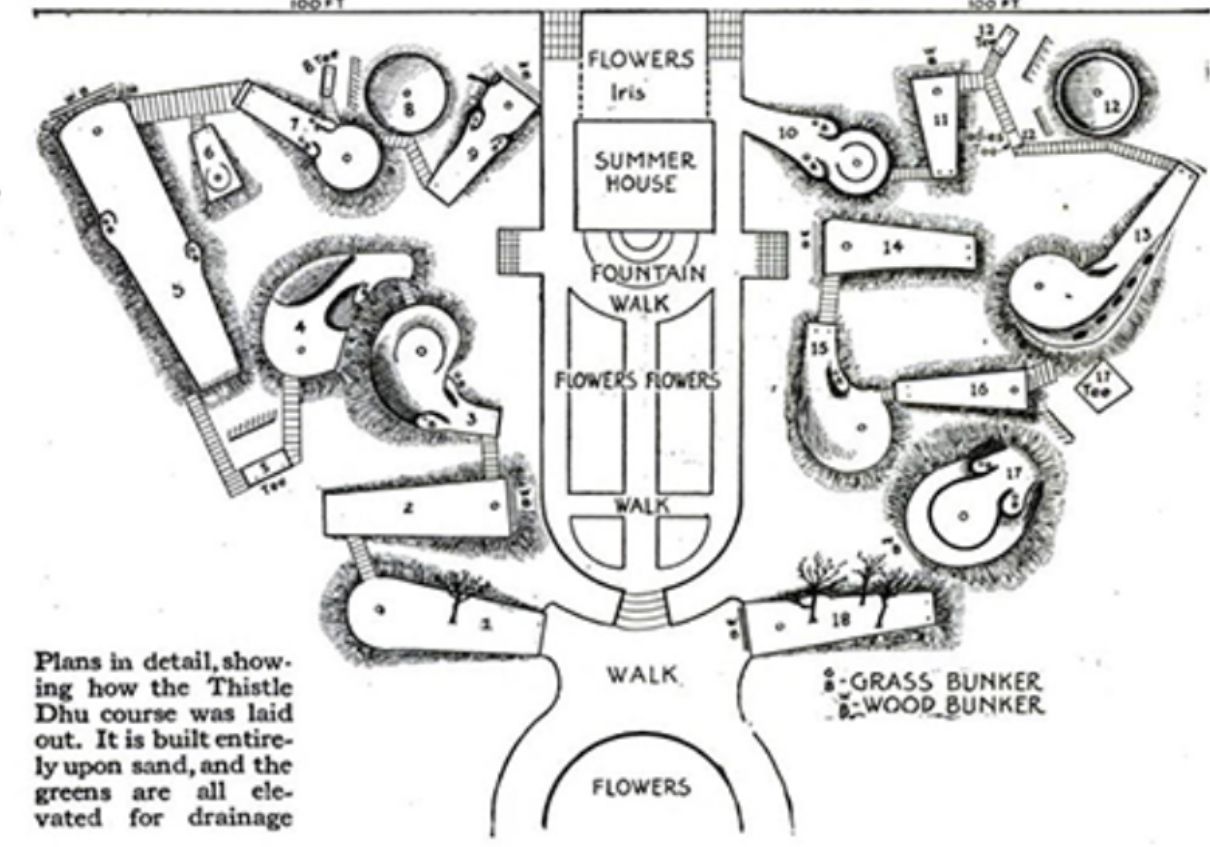
Pinehurst’s original Miniature Golf Course
In Pinehurst, North Carolina, Barber built what many historians consider the first standardized miniature golf course. Named “Thistle Dhu” (“This’ll Do”), it was a beautifully landscaped, geometrically shaped course that embraced the charm of the full game in miniature form. It featured contours, hazards, and design elements that echoed Golden Age golf architecture.
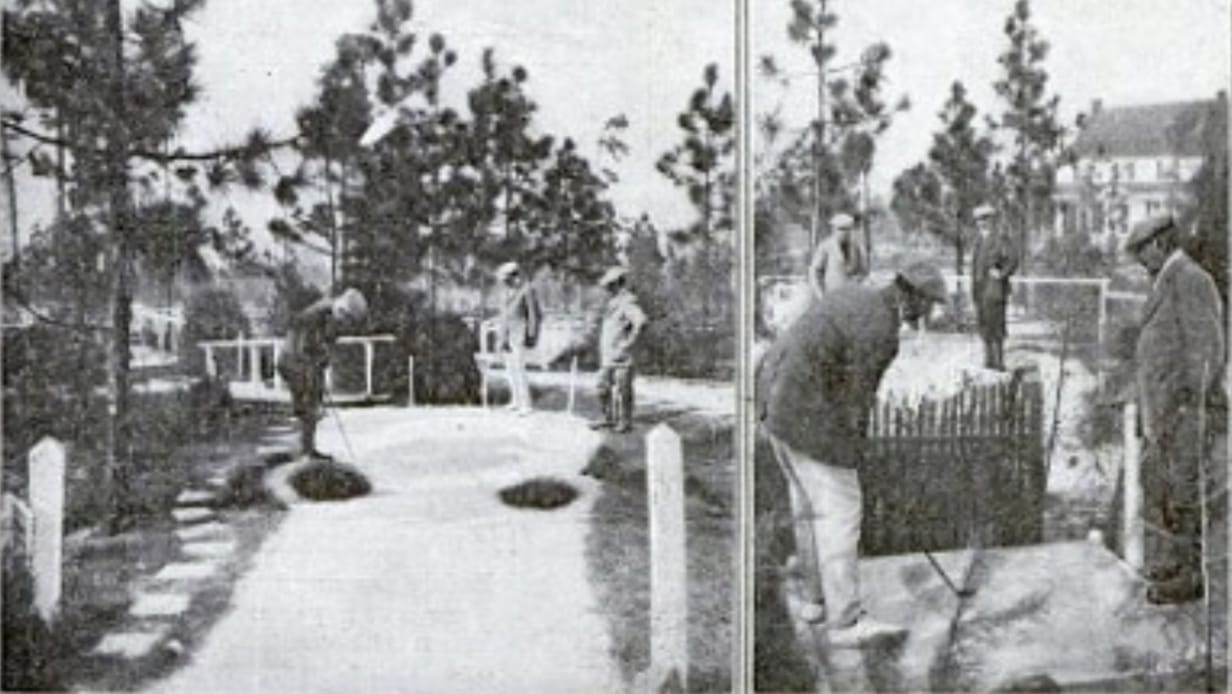
The famed Thistle Dhu course
Thistle Dhu marks the moment miniature golf became an intentional architectural craft.
2. Thomas McCulloch Fairbairn – The Inventor Who Made Mini-Golf Possible Everywhere
Fairbairn revolutionized the space by creating a new type of artificial putting surface. His “mineralite” material allowed miniature courses to be built on rooftops, in cities, and on small parcels of land. Fairbairn’s innovation became the springboard for a national craze.
⸻
The Great Mini-Golf Boom (1926–1930): America Goes Crazy for Small Golf
During the Roaring ’20s, mini-golf exploded. By 1930, the United States had over 25,000 miniature golf courses—ranging from country-club versions to rooftop installations in New York City.
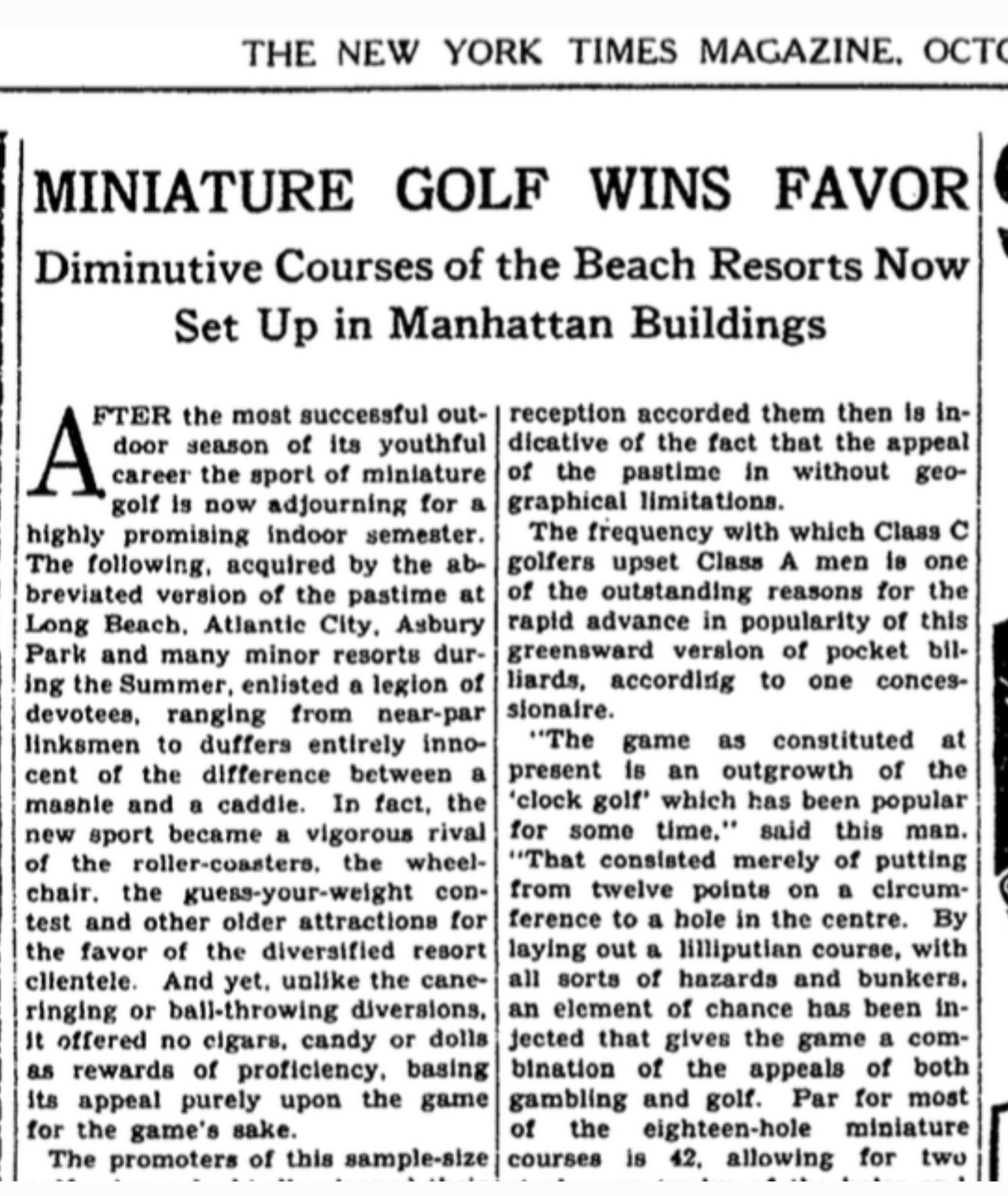
Published weeks before the Wall Street Crash
These early courses tended to be:
• Garden-like and aesthetic
• Architecturally inspired
• Strategy-driven rather than obstacle-driven
Mini-golf was sophisticated—and wildly popular.
Then came the Wall Street Crash!!!!
The Depression Era: Enter the Windmills (1930s)
As disposable income evaporated, miniature golf had to reinvent itself. The ornate, landscaped Pinehurst-style courses were expensive. But simple, whimsical, obstacle-laden courses were cheap.
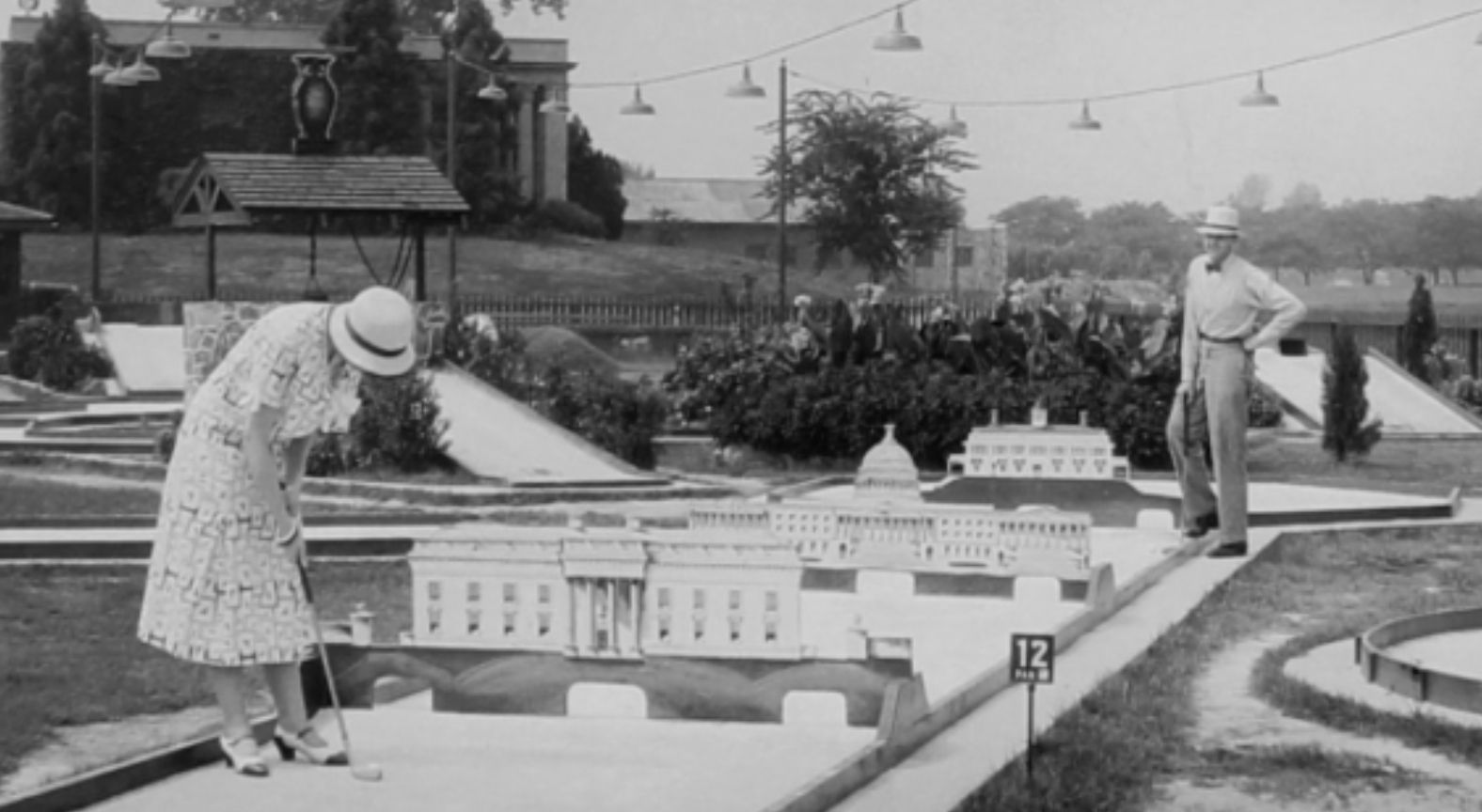
Washington DC’s Depression Era Course
And thus the era of DIY miniature golf began. People used whatever materials were available:
• Old tires
• Drainpipes
• Wooden ramps
• Scrap metal
• Barrels and crates
This is when we see the rise of the famous windmills, the clowns, and the playful hazards that define American mini-putt today. Miniature golf became:
• Affordable
• Accessible
• Profitable for small operators
• Genuinely fun for families
Ironically, the Great Depression democratized mini-golf—and created the cultural image we still associate with the game.
Post-War Mini-Golf & The Modern Era (1950s–Present)
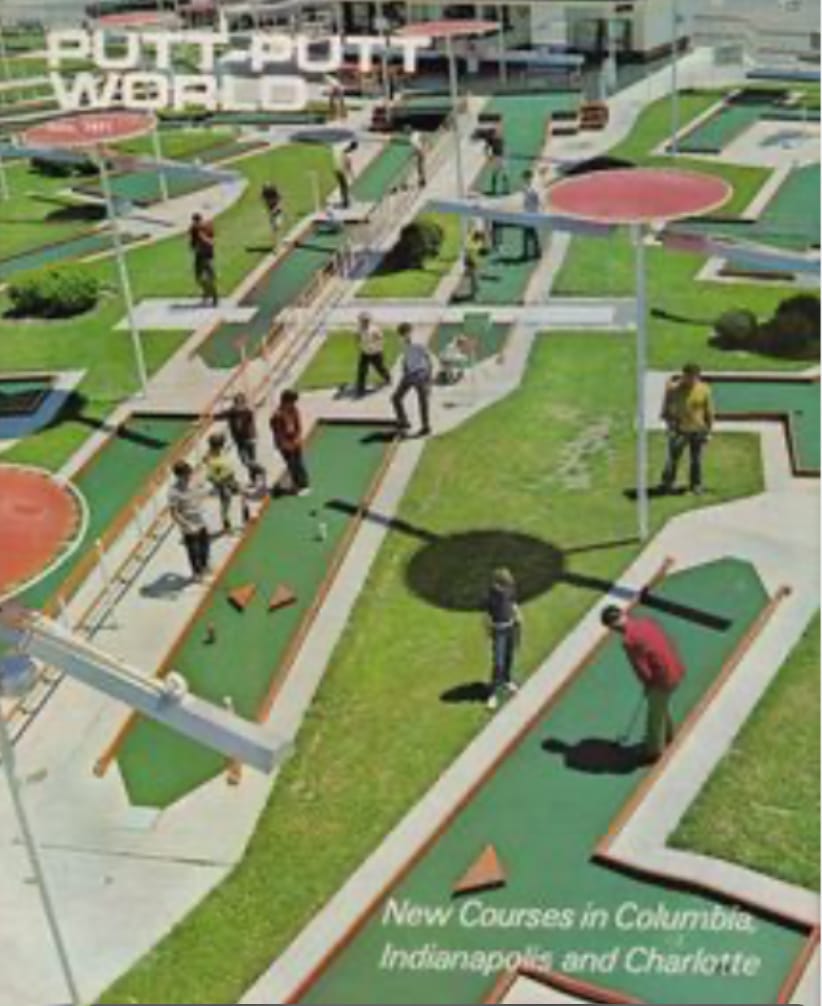
After World War II, America rediscovered leisure. Roadside attractions boomed, neon signs lit up highways, and miniature golf evolved into a staple of family vacations and date nights.
The design split into two dominant styles:
1. The Challenge Course
A more athletic, tournament-caliber format seen in Europe (especially Sweden, Germany, and Switzerland), where strict standards govern hole shapes, playing surfaces, and competitive integrity.
2. The Adventure Course
The American classic:
• Waterfalls
• Castles
• Pirate ships
• Dinosaurs
• Story-driven environments
Adventure golf embraced spectacle—and cemented mini-putt as a cultural phenomenon far beyond golf’s traditional borders.
Today the sport maintains both identities: serious competition and playful entertainment.
Tom Morris may have inadvertently invented miniature golf and now some 160 years later, Tiger Woods is trying to reinvent the experience with his version called, “Pop Stroke.”
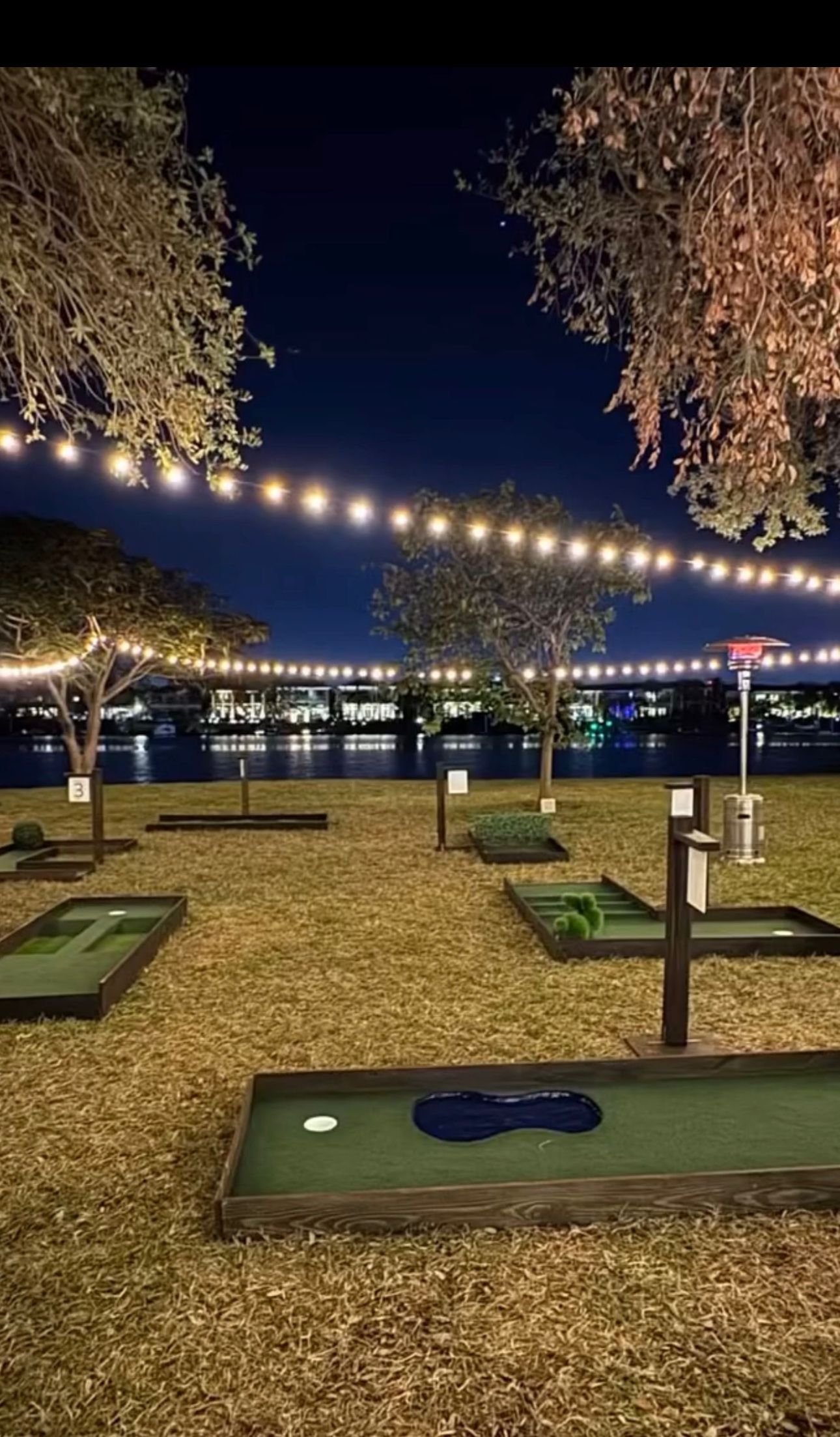
Tampa Bay Party Company’s Golf Course
As a strange aside, if you happen to live in the Tampa- Sarasota region of Florida, a good friend and his wife own their very own mobile Miniature Golf Course that you can rent for your parties. Their company, “THE TAMPA BAY PARTY COMPANY” was the first to create the mobile putt putt golf course in Tampa Bay. I guarantee my friend, Lord Andrew Kent has no idea their idea dates back to Old Tom Morris!
It just goes to show you that what is new, is never truly new.
Why Miniature Golf Matters to Golf History
Miniature golf may not look like St Andrews or Augusta, but it carries enormous historical significance:
• It broadened golf’s accessibility
• It introduced millions of kids to the game
• It inspired creativity in course design
• It preserved the spirit of putting-focused fun dating back to Old Tom Morris’ creation of the Himalayas
• It showed that golf could be artful, whimsical, and democratic.
Miniature Golf is not a sideshow, it’s one of golf’s most important cultural ambassadors.
Conclusion: The Small Game With a Big Legacy
From the undulating greens of the St Andrews Himalayas to the bright windmills of Route 66, miniature golf has mirrored society’s shifting tastes while always delivering joy. It has evolved from a Victorian necessity to a Golden Age experiment, a Depression-era pastime, and finally a global cultural tradition.
Miniature golf is proof of something profound:
You don’t need 150 acres to capture the magic of golf—sometimes all you need is a putter, a ball, and a little imagination.
THE AMERICAN GOLF MUSEUM PODCAST
If you haven’t listened to this podcast yet, I promise it’s worth your time. I visited the semi-private museum which is a mix between PT Barnum’s Tent of Curiosities and Willie Wonka’s Chocolate Factory…and yes you need a golden ticket to enter this museum you can’t find on a map, this museum with no signs on the road, this museum that is never open.
It’s one of our most fun podcast - lots of humor and some great golf history.

The Society of Golf Historians Annual Meeting
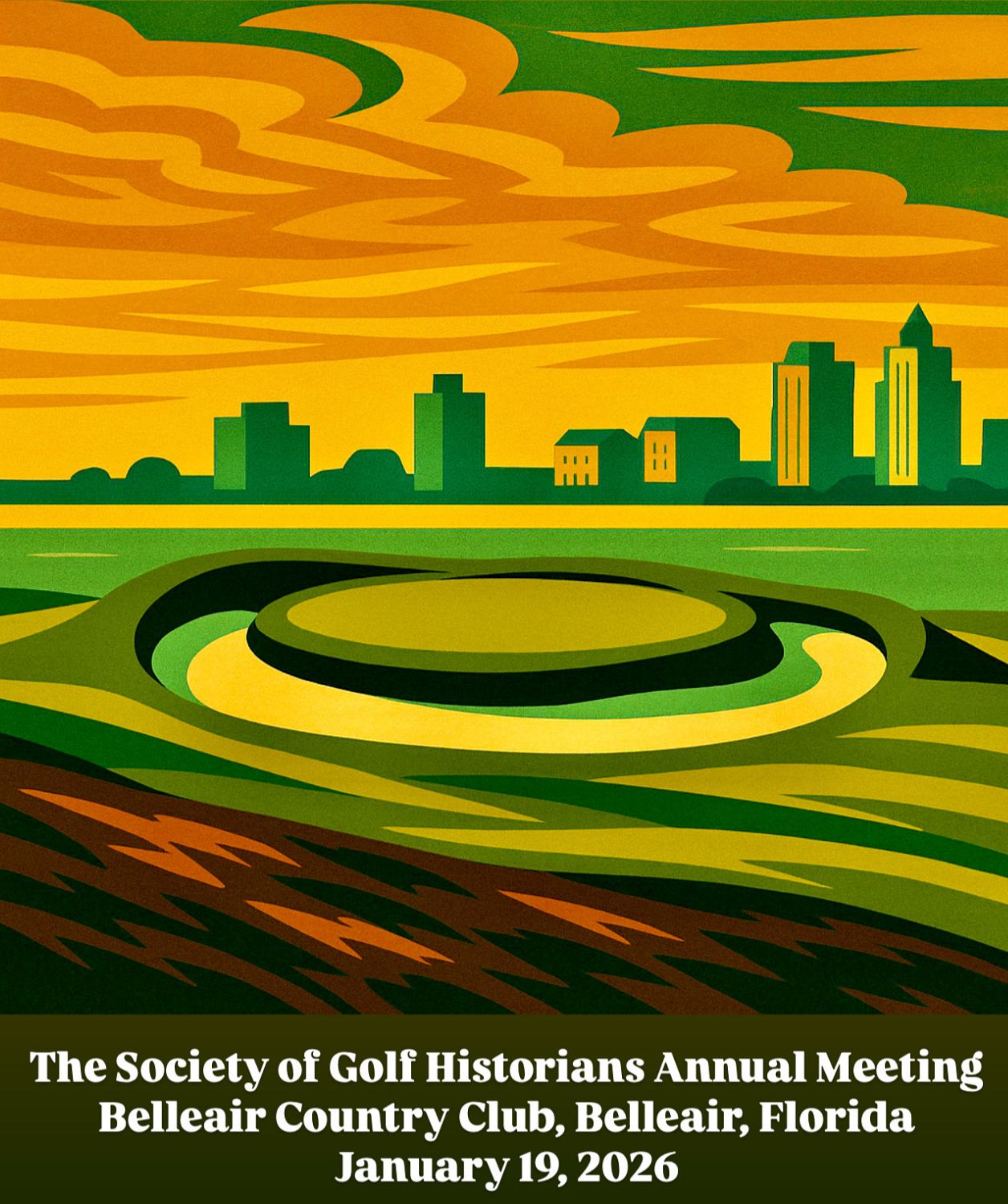
We have a handful of spots left for our first annual Society of Golf Historians Meeting. If you have an interest in attending here are the details:
Where: Belleair CC in Belleair, FL
When: January 19, 2026
Registration Cost: $500
Registration includes one year membership with the Society of Golf Historians
Round on Belleair CC’s West Course
Dinner at Belleair CC with a series of speakers
If you want to join us, reach out soon as we only have a few spots left.
We are planning a very small get together in Chicago in the Summer of 2026. Stay tuned for more information.
THANK YOU!!!
A special thanks to the thousands of you who read this newsletter on a weekly basis. It’s staggering to me that so many of you take the time out of your day to read it- and often email me your thoughts about it. Also how is it possible I have written 100 of these in a row??? This is our 100th newslettter!!!
Thank you for your help keeping Golf History alive.