- THE SOCIETY Newsletter
- Posts
- The SOCIETY Newsletter #110

The Platinum Age
Why we may be living through the greatest era of golf design
It sounds heretical to say it out loud. I know the statement will be mocked, but here is my argument.

Pine Valley
Golf’s Golden Age: the sacred window between roughly 1910 and 1935 is supposed to be untouchable. It gave us the templates, it leaned in on strategy, width and angles, and a land-first mindset that shaped the game as we know it. To suggest that today might rival it feels like sacrilege.
And yet, if we’re honest, this may be the most intellectually rich, historically informed, and creatively liberated period golf architecture has ever known.
Not because we’re inventing more—but because we finally understand what we already have and are pulling the resources to expand that language, that reach.
⸻
The Expansion of Golf Design
We have been blessed to live in an era where architects have set their egos aside. Prior to architects like Ron Prichard and Ron Forse, if you handed a golf course architect a Golden Age golf course, the architect thought their job was to improve it - change it- modernize it. This bastardization of great designs has created a design profession which had never existed- architects who solely specialize in the restoration of golf courses. Others have used their restoration resume as a means to kick off their own original designs.
Unlike decades past, the era that we currently reside in, our architects have learned from their restoration work and have expanded upon the very canvas of golf course architecture - it’s not an argument of who was a better architect MacKenzie or Doak, it’s more of a story of continuation and the expansion of ideas.
Restoration as a Creative Act
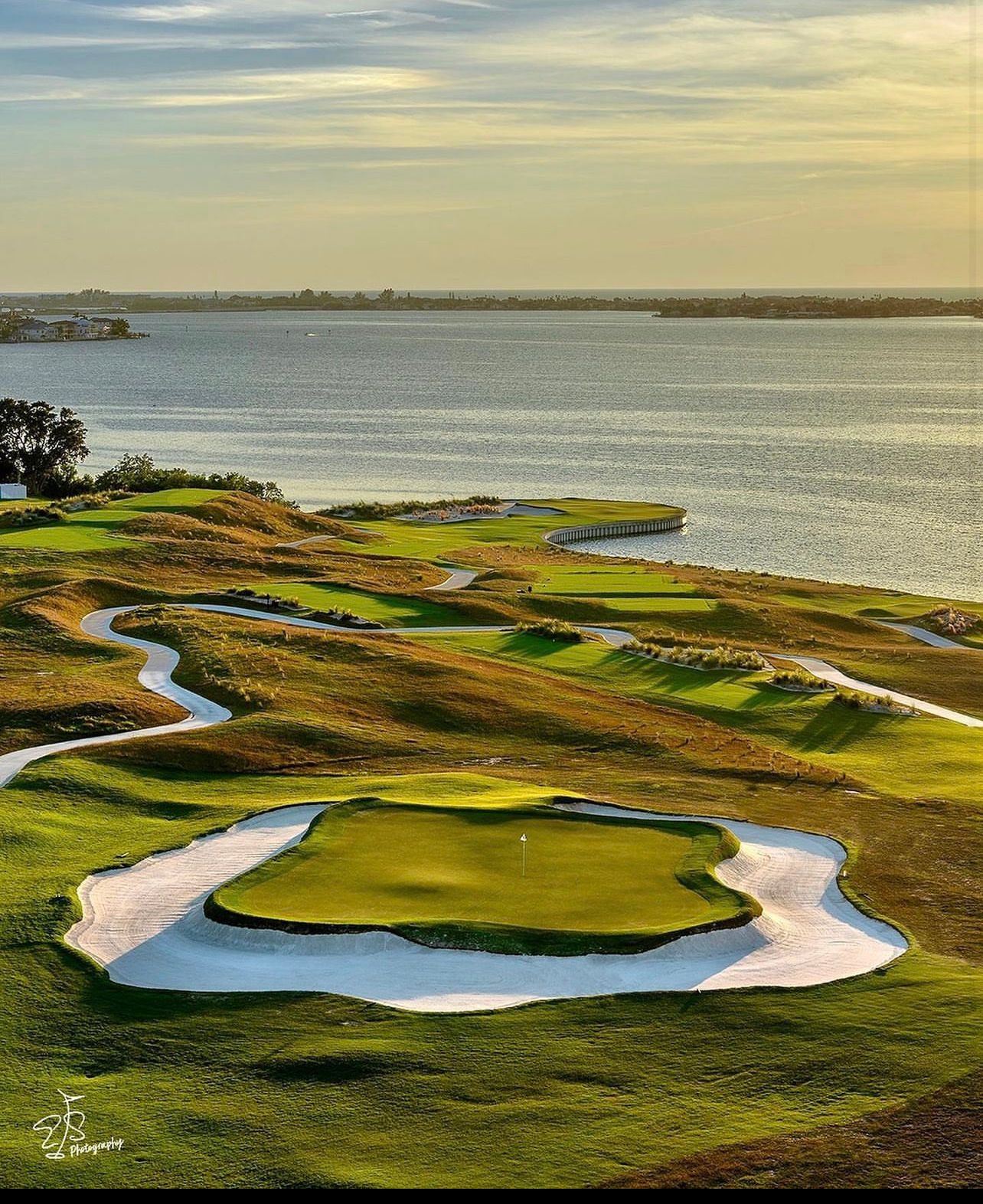
Belleair CC Photo by Evan Schiller
Restoration is often misunderstood as nostalgia. And the art of restoration by the architect is more than what it seems.
In reality, it is one of the most demanding forms of design. It requires historical literacy, interpretive restraint, and the confidence to let bold ideas re-emerge. It also means that the golf course architect must argue on the behalf of another designer who isn’t around to plead their case.
The modern movement to restore work by architects like Seth Raynor, CB Macdonald, AW Tillinghast William Flynn, Donald Ross and so many more has reintroduced concepts the game had quietly abandoned: scale, width, angles and strategy.
What makes this moment special isn’t that these ideas are old—it’s that they are finally understood and embraced in modern designs.
New Courses, Old Principles

Artists rendering of Tara Iti
Contemporary architects are no longer trying to overpower land. They’re listening to it.
Across the world, new courses are being built with restraint and confidence—embracing walking routings, shared fairways, firm turf, and strategic options rather than forced carries and spectacle.
This isn’t imitation. It’s fluency.
Designers today aren’t copying the past; they’re speaking the same language with a modern accent.
The Democratization of Great Design

Bandon Dunes Golf Resort (Photo: Evan Schiller)
Perhaps the most overlooked shift of all: great design is no longer confined to elite clubs.
Municipal restorations, and destination resorts are proving that architecture—not opulence—is what makes golf memorable. Strategic interest doesn’t require exclusivity. It requires intention.
In that sense, today’s era may be more aligned with golf’s origins than the private-club boom that followed the Golden Age.
Today’s leading architects are not retreating behind gates; they are working in public view. They are designing accessible, walkable destinations where the daily-fee golfer can experience strategic nuance once reserved for private enclaves. Their work embraces firm turf, width, options, and the ground game—ideas that reward curiosity rather than pedigree. In doing so, they’ve quietly dissolved the false link between exclusivity and excellence. Great architecture is no longer something to be protected from the public; it is something best revealed to it.
⸻
Great Ground Over Great Zip Codes

Prairie Dunes CC
One of the most profound shifts of the modern era has nothing to do with style, scale, or technology.
It has to do with where we choose to build.
For much of golf’s postwar history, location became a proxy for quality. Oceanfront, resort corridors, prestige addresses—zip codes carried more weight than the land itself. Courses were forced onto sites because they were desirable, not because they were suitable. Earthmoving filled the gap where ground failed to speak.
The Platinum Age quietly reversed that logic.
We began to value ground over address —to recognize that great golf does not require exclusivity, proximity, or prestige. It requires land that wants to be golf.
To some extent, this idea surfaced earlier at places like Prairie Dunes Country Club where isolated, wind-swept ground proved that strategic brilliance could thrive far from coastal glamour. But the philosophy was reborn—fully and unapologetically—with Sand Hills Golf Club.
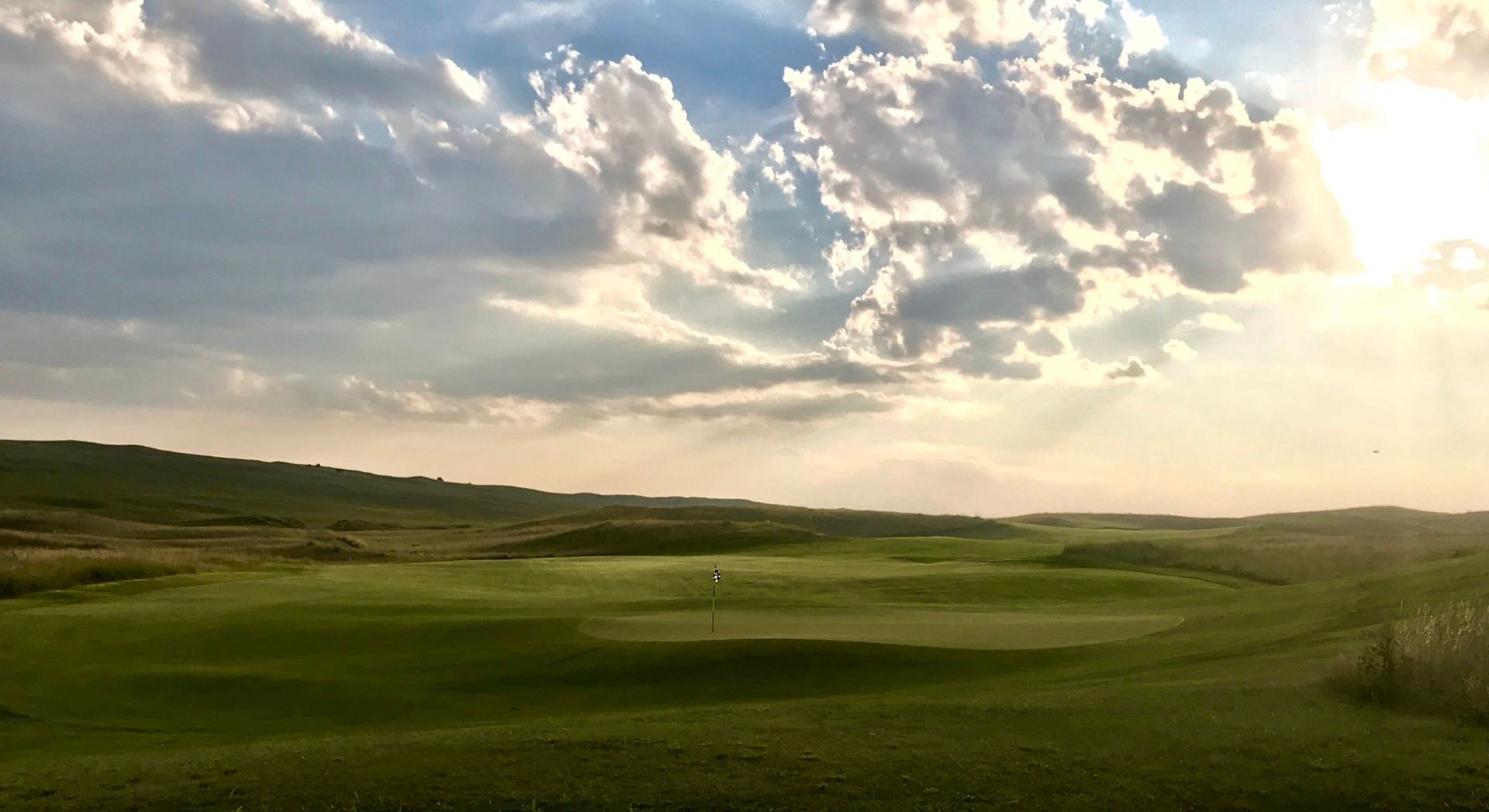
Sand Hills Golf Club
Sand Hills did something radical: it trusted the land completely. It didn’t apologize for its remoteness. It didn’t dress itself up as a destination. It simply allowed extraordinary ground to dictate everything… routing, strategy, aesthetics, and experience. The message was unmistakable: great golf needs great ground, not a great address.
That idea didn’t remain theoretical for long.
With Bandon Dunes, the philosophy exploded into the mainstream. Bandon proved that if the ground is compelling enough, golfers will com e to walk, replay, and evangelize—regardless of convenience or luxury. The destination was no longer the draw. The land was.
This shift liberated golf architecture.
Architects and owners were freed to seek out sites that spoke naturally to the game: sand ridges, rumpled prairie, coastal dunes, forgotten farmland. Developers learned that restraint could be an asset. And golfers learned perhaps most importantly that the soul of a course is felt underfoot, not found on a map.
In valuing ground over zip code, modern golf didn’t just rediscover an old truth, it corrected a long-standing mistake.
And in doing so, it reaffirmed the central principle that defines this era:
Great golf does not need to be placed.
It needs to be revealed.
——
Why This Moment Is Different

Friars Head
The original Golden Age didn’t know it was golden.
This one does.
We are building, restoring, and stewarding courses with historical awareness, technical ability, and philosophical humility. We are no longer chasing distance or perfection—we are chasing meaning.
Golf architecture has matured. It has learned from its excesses. It has remembered its roots.
That combination has never existed before.
⸻
The Greatest Era Isn’t About Time—It’s About Understanding
Great eras aren’t defined by dates. They’re defined by excellence.
Today, land, knowledge, technology, and philosophy are finally pointing in the same direction. We understand why classic holes worked. We know how to build and maintain them. And most importantly, we want to.
That may not look like a Golden Age on the calendar.
But it might be something rarer.
I had said this may times - golf course architecture is a living breathing art form and their canvas is the land. We live in an age of Michelangelo’s and Davinci’s - the question I have is who will be the next Jackson Pollock? Who is going to do something dramatic to make their mark?
SPEAKING OF GOLF COURSE ARCHITECTURE
The third annual Society of Golf Historians Auction is around the corner and we are looking for more courses to host our bidders.
This year the Society will be kicking off a Golf History Research Grant and this year’s proceeds will be awarded to Herbert Warren Wind Award Winner, Stephen Proctor to aide the research on his next book on Bernard Darwin.
We currently have five Macdonald/Raynor courses, one Alister MacKenzie, four Donald Ross courses and more!!!
If you are a member of a great golf course and are interesting in hosting a threesome please reach out to me at [email protected].
THANK YOU!!!
A special thank you for taking the time to read our weekly newsletter. It’s a pleasure to connect with the thousands of you who take the time out of your day or evening to read it.
