- THE SOCIETY Newsletter
- Posts
- The SOCIETY Newsletter #111

Riviera: Light, Shadow, and the Return of Ben Hogan
There are photographs that document history, and then there are photographs that feel like history. This image of Ben Hogan at Riviera Country Club belongs firmly to the latter. It is not merely a record of a golf swing, but a visual of survival, resolve, and the thin line between darkness and light.
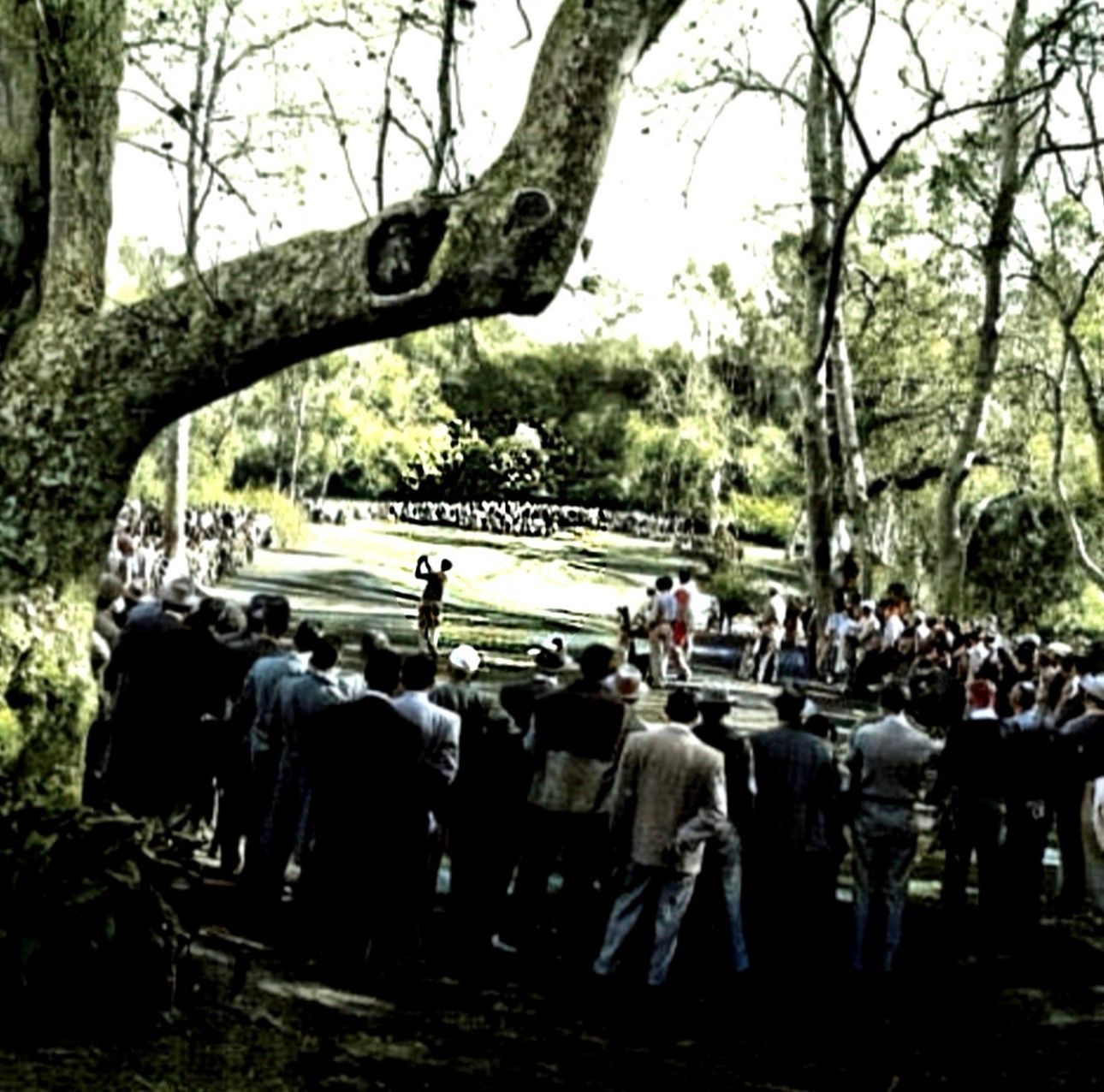
Hogan at Riviera went toe to toe with Snead
The setting could not be more fitting. Riviera already a course of shadows, angles, and quiet menace frames Hogan beneath its ancient trees, their branches arching like a cathedral nave. The crowd presses in, dark and indistinct, forming a ring of witnesses. They are not simply spectators; they are believers. The light spills down the fairway toward Hogan, illuminating him at the precise moment of action, while the edges of the scene dissolve into shadow. It feels less like a tournament photograph than a Renaissance painting…our hero in spikes.
And then there is the moment itself. This was Hogan’s first tournament appearance after his near-fatal car accident, an event so violent it jeopardized his life, let alone his career. Few believed he could compete. Fewer still believed he could contend. Yet here he stood, alone in the light, posture perfect, swing intact, body betraying none of the pain that would haunt him for the rest of his life.
The beauty of the photograph lies in its honesty. Hogan is not framed as triumphant; he is framed as defiant. The darkness remains both in the trees and in the story, but it no longer controls the scene. Light does. In that contrast, the image captures something words rarely can… the essence of Hogan himself. Not grace without struggle, but greatness forged through it.
It is Riviera, yes. It is Hogan, certainly. But above all, it is a portrait of return… golf’s most private hero stepping back into the arena, asking nothing from the crowd except silence, and proving, once again, that the hardest ground to conquer is not a fairway or a green, but fate itself.
The 6th Hole: A Masterclass in Psychological Architecture

Pencil Sketch of RCC’s 6th hole
At first glance, Riviera’s par-three 6th appears almost playful… a modest iron shot to a broad green framed by amphitheater like hillsides. But at its center lies one of the most audacious features in all of golf architecture: a bunker embedded directly in the putting surface. It is a design choice so bold, so intellectually confrontational, that it remains unmatched nearly a century after its creation.
The brilliance of the hole lies not in its length, but in its defiance of convention. By splitting the green into distinct lobes, the central bunker forces the golfer to think before ever selecting a club. There is no universal “safe” target. Each hole location creates a different problem, demanding precision, trajectory control, and above all… commitment. A shot safely on the green can still be the wrong shot.
This bunker is not a gimmick; it is a philosophical statement. It embodies the belief that putting should be as strategic as driving, and that the green itself can be the primary hazard. Putts are rarely straightforward. Miss on the incorrect side and the golfer may face a nervy chip from sand to green, or a long, breaking putt that feels closer to defense than offense.
What makes the 6th truly enduring is how subtly it challenges ego. The hole offers no intimidation from length or water, yet it routinely exposes imprecision and indecision. It is golf reduced to its essentials: target, execution, consequence.
In an age when par threes often rely on scale and spectacle, Riviera’s 6th remains timeless because it relies on ideas. It is not a hole you overpower. It is a hole you must understand.
The 10th Hole: Golf’s Most Thought-Provoking Temptation
Few holes in golf inspire as much debate, indecision, and quiet dread as the drivable par-four 10th at Riviera Country Club. Barely 315 yards from the back tees, it appears harmless…inviting, even. Yet for nearly a century, it has functioned as a psychological trap, one that reveals a player’s temperament as much as his skill. In a sport often obsessed with length, Riviera’s 10th has endured as proof that choice, not distance, is the essence of great design.

Riviera’s diabolical 10th
The hole was the creation of George C. Thomas, whose architectural philosophy centered on presenting multiple routes to the same destination, each with consequences. Thomas believed golf should reward thoughtful restraint as often as bold aggression, and nowhere is that belief more elegantly expressed. The green sits on a diagonal, angled from front right to back left, with deep bunkers guarding the preferred line and a putting surface that falls away sharply from the tee. Miss long or left and recovery becomes treacherous; miss short and right and par is no bargain.
Strategically, the hole asks a simple question with no stable answer: How much risk are you willing to assume today? Wind direction, firmness, pin placement, and most importantly confidence all influence the decision. Laying back with an iron offers control but brings its own hazards, as the shallow green demands precise distance and trajectory. Driving the green can yield eagle, but just as often produces bogey or worse. The hole famously resists domination, even by the game’s greatest players.
It is no accident that the 10th has been endlessly copied yet never duplicated. Its brilliance lies not in spectacle but in balance, an equilibrium between temptation and punishment that shifts subtly from round to round. In an era of bomb-and-gouge golf, Riviera’s 10th remains defiantly cerebral. It does not reward power alone. It rewards judgment.
In that sense, the 10th hole is Riviera distilled: modest in appearance, ruthless in execution, and timeless in relevance.
The Society of Golf Historians Auction
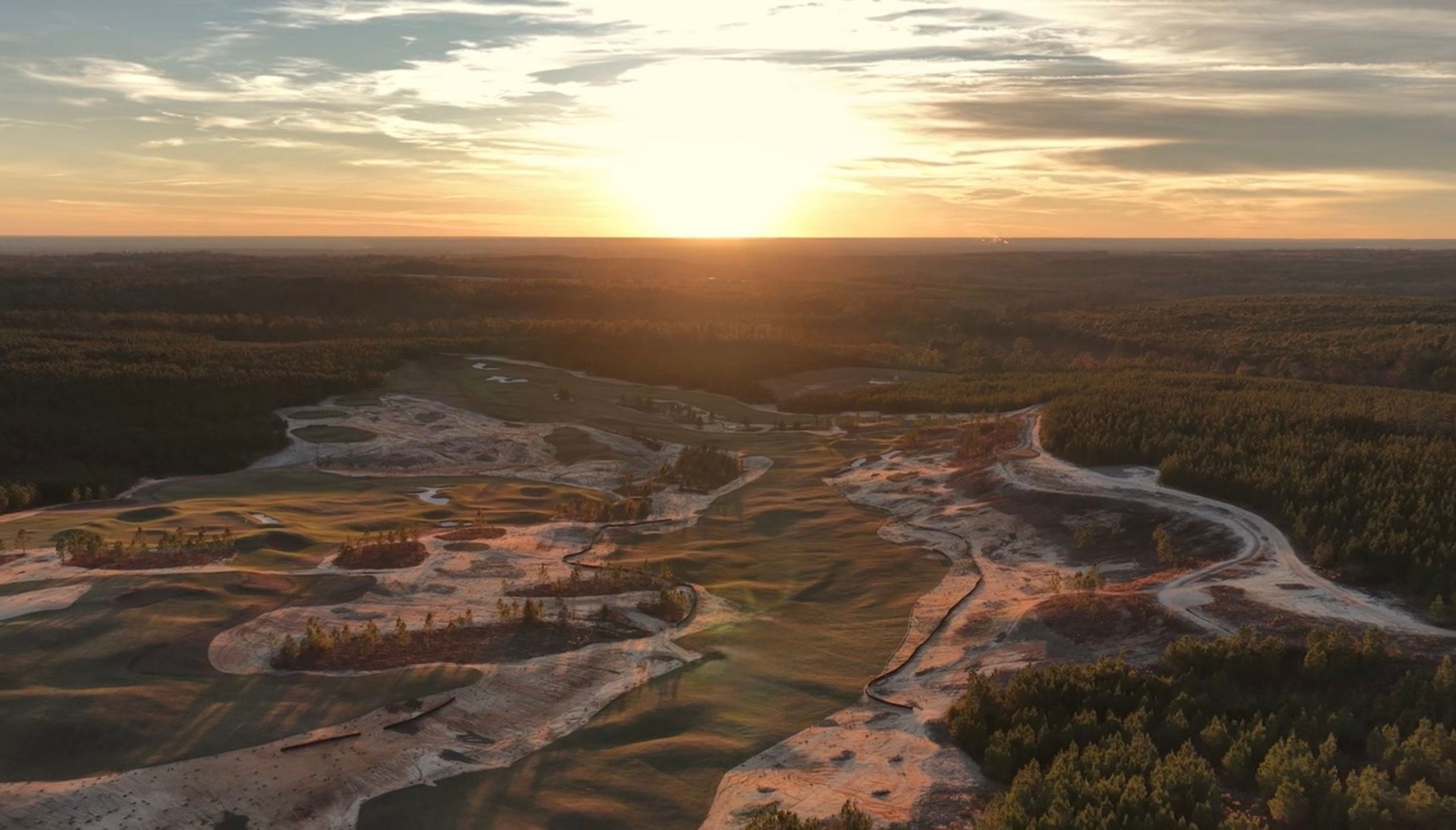
The MacKenzie Course (photo: Justin Wheelon)
Our third annual Society of Golf Historians Auction will kick off in March. We are looking for more courses to add to the auction.
We currently have golf courses designed by Dr. Alister MacKenzie, CB Macdonald, Seth Raynor, Donald Ross, Perry Maxwell, Bobby Jones, Willie Park, Junior, Walter Travis, James Braid, Brian Schneider, and Alec Campbell (amongst omitted names). We are seeking additional courses and additional architects both historic and modern to help round out our auction.
Proceeds from our auction will used to help pay for the research of Stephen Proctor’s next book on Bernard Darwin.
This is an exciting new chapter for the Society of Golf Historians - building a grant to help fund golf history research!
Thank you for being a part of golf history!
THANK YOU!!!
Thank you again for reading our weekly newsletter. Did you like it? Did you hate it? I would love to have your feedback. What stories would you like to be told? Love hearing from you.